
Protracted Antidepressant Withdrawal Is (Usually) Central Sensitization

When I forgot to take my morning dose of Lexapro, I would realize it by 2 or 3pm in the afternoon—an insidious sense of malaise and discomfort difficult to put into words. By 5pm, debilitating dizziness, nausea and irritability would set in. Rushing home from work, I would chew a 10mg tablet of lexapro (which incidentally makes your tongue numb: a coincidence or another manifestation of SRI-induced numbing?), wash it down with water, and within 30 minutes, symptoms would abate completely.
This is a typical timeline for acute antidepressant withdrawal, but having treated, supervised, and discussed thousands of antidepressant withdrawal cases over the last five to six years, a significant subset of patients develops persistent withdrawal symptoms that do not reliably improve with reinstatement of the drug, a phenomenon termed "protracted withdrawal."
In my experience, protracted withdrawal is most likely to occur in patients who: (1) stop their medication cold turkey or taper too quickly; (2) do not reinstate treatment when they experience withdrawal symptoms ("white-knuckling"), or reinstate only weeks later after prolonged suffering; (3) have a biological or environmental predisposition to nervous system sensitization, reflected by personality traits (high neuroticism, conscientiousness, and/or obsessive-compulsivity) and significant adverse childhood experiences, complex trauma, or PTSD.
The most concerning aspect of protracted withdrawal is that symptoms do not reliably improve when reinstating treatment, whether this occurs month or a year after stopping. Note: A proportion of these patients do improve with reinstatement, but a comparable proportion get a lot worse when restarting, termed a “paradoxical reaction.” This makes the risk-benefit calculus of reinstatement very unclear, and we have not yet identified predictors of successful outcomes in PW reinstatement. We generally recommend starting very slowly and make cautious adjustments at closely monitored weekly intervals, if reinstatement is attempted.
Question #1: If protracted withdrawal symptoms do not reliably improve with reinstatement, is it truly withdrawal? Withdrawal suggests a deficit that can be filled or replaced with what was lost. But because it frequently can’t, some experts have turned to the phrase “drug injury” or nervous system injury” to better capture the phenomenon of postacute withdrawal.
Question #2: Is there truly any evidence of injury? And does injury mean at the level of receptors and synapses? To date, there is limited neurobiological evidence suggesting that the serotonergic system (SERT, the 5-HT transporter, various pre-and-postsynaptic 5-HT receptors, and metabolism and release of intracellular serotonin) is unable to recalibrate long-term after prolonged SRI exposure, in animals or humans, and there is no evidence correlating any persistent change with adverse behavioral or functional outcomes. A small PET imaging study (n=8) in monkeys found persistent SERT upregulation 1.5 years after discontinuation, though was confounded by juvenile exposure (the monkeys were exposed to the antidepressants at 2 years old). Of eight social behaviors assessed in the setting of upregulated SERT, no deficits were observed, suggesting that the serotonergic system can change (e.g adapting to persistently upregulated SERT with compensatory shifts in serotonin synthesis, metabolism, receptor density) without a net difference in serotonergic transmission or overall functional status. There are data indicating short-term (weeks-long) changes in transporter and receptor expression changes after SRI treatment is withdrawn in animals (reviewed by Horowitz et al. in 2023), but these appear to reflect the standard time course of homeostatic recalibration.
Nonetheless, it is well-established that psychiatric drugs can cause neurobiological “injury”, the best example being antipsychotic-induced tardive dyskinesia (TD). Evidence of the D2 hypersensitivity hypothesis has been observed in humans, and the theory is supported by clear efficacy of VMAT2 inhibitors which reduce the synaptic release of dopamine to limit stimulation of upregulated D2 receptors. Although TD can present with symptoms other than involuntary orofacial movements, it is much more differentiated and well-defined than protracted SRI withdrawal. To date, no pharmacologic intervention (serotonergic or other) has demonstrated efficacy, even anecdotally, in meaningfully relieving protracted withdrawal symptoms. Protracted withdrawal's resistance to serotonergic and non-serotonergic treatment suggest that we may be looking for solutions in the wrong place, when the more apt comparison may be to an increasingly recognized category of medical conditions.
The Rise of Medically Unexplained Disorders
In the Western world, there has been a massive rise in diagnoses of various syndromes (symptom clusters) with unclear pathophysiology. It doesn’t take much time on reddit to discover highly-populated and active subreddits for various medically unexplained conditions:
For starters:
Adrenal fatigue
Atypical facial pain
Benign fasciculation syndrome
Burning mouth syndrome
Central sensitization syndrome
Cervicogenic dizziness
Chronic abdominal pain
Chronic dizziness
Chronic fatigue syndrome / myalgic encephalomyelitis (ME/CFS)
Chronic Lyme disease or persistent symptoms attributed to Lyme disease
Chronic low back pain, nonspecific
Chronic migraines
Complex regional pain syndrome
Costochondritis or persistent noncardiac chest-wall pain
Cyclic vomiting syndrome
Dysautonomia, unspecified
Electromagnetic hypersensitivity
Fibromyalgia
Functional dyspepsia
Functional neurological disorder
Functional seizures / psychogenic nonepileptic seizures
Functional urinary symptoms
Heavy-metal toxicity, suspected or unconfirmed
Histamine intolerance
Hypermobile Ehlers–Danlos syndrome
Hypermobility spectrum disorder
Idiopathic intracranial hypertension without clearly documented objective findings
Idiopathic neuropathic pain
Idiopathic pruritus
Interstitial cystitis / bladder pain syndrome
Irritable bowel syndrome
Long COVID / post–COVID-19 condition
Mast cell activation syndrome (MCAS)
Myalgic encephalomyelitis/chronic fatigue syndrome (ME/CFS)
Myofascial pain syndrome
Noncardiac chest pain
Non-celiac gluten sensitivity
Post-infectious fatigue syndrome
Postural orthostatic tachycardia syndrome (POTS)
Pudendal neuralgia
Somatic symptom disorder
Temporomandibular disorder (TMJ)
Tension-type headache, chronic
Tinnitus without an identified structural cause
Vulvodynia
Whiplash-associated disorder, chronic
It has saddened me as a clinician to witness the scale of suffering of people diagnosed with these conditions. It is also interesting how profound the overlap between these conditions, to the point that an assigned diagnosis for any individual patient with a cluster of symptoms may be most influenced by context: If the cluster of symptoms is slightly pain-predominant and you’re in a rheumatologist’s office, it’s fibromyalgia. If it involves GI distress and you’re seeing a gastroenterologist, it’s IBS. A psychiatrist, functional neurologic disorder or somatic symptom disorder.
Did these syndromes commonly occur in humans 10,000 years ago? Or is it that we are chronically stressed, sit longer, exercise less, work harder, less social and connected and overstimulated (including by highly emotionally-charged news networks, TikTok and instagram)? Are they truly attributable to stress and trauma, or will some of these conditions soon have a well-defined, non-CNS-based pathophysiology?
Central Sensitization: A Unifying Theory
Harvard professor Clifford Woolf first identified the mechanism central sensitization in the 1980s through a series of electrophysiological and reflex experiments in rats, and later expanded on the concept high-profile 2011 review in PAIN. It took until 2017 for the International Association for the Study of Pain to formalize central sensitization into a diagnostic category relevant to chronic pain. Alongside nociceptive pain (from tissue damage) and neuropathic pain (from nerve damage), they added nociplastic pain, or pain arising from altered central nociceptive processing without evidence of tissue or nerve damage driving it. The concept was laid out for a broad clinical audience in Lancet in 2021, and it is influencing how the the field understands fibromyalgia, chronic low back pain, tension-type headache, IBS, and the long list of conditions that used to get filed under "medically unexplained" (see above list).
Central sensitization works as follows: Severe bodily or mental stress and/or trauma, either single events or repeated events, or perhaps some other unknown cause, induces an adaptive state of hyperarousal and hypervigilance in the CNS, involving increased activity in nociceptive facilitatory pathways, poor endogenous analgesia (the brain’s descending inhibitory system loses its brakes), activated glia in the CNS, altered sensory processing, and disrupted resting-state connectivity in the default mode network. Layered on top of this is a threat-appraisal loop — fear, prior experience, catastrophic beliefs like “pain equals damage,” environmental context, and emotional state all feed into how much danger the brain assigns an incoming signal, which creates more muscle tension, more sympathetic arousal, more stimulatory input to the dorsal horn, more sensitization, which then produces more pain, which confirms the danger appraisal, tightening the loop further. None of this requires ongoing tissue damage and the loop sustains itself. It’s a defense mechanism that protects a body or mind that has been traumatized from further injury, which makes sense in a dark sort of way, since our brain is wired to maximize survival, not how good we feel.
Protracted Antidepressant Withdrawal: Another Cluster of Symptoms of Central Sensitization
Symptoms of protracted withdrawal are non-specific and are drawn from a pool of symptoms common to all of these medically unexplained conditions. Moreover, exposure to antidepressants is neither necessary nor sufficient to induce symptoms that resemble symptoms of protracted withdrawal. Every organ system is fair game (see below figure), as is the case other medically unexplained syndromes. You could argue that serotonin, as a fundamental neurotransmitter that mediates numerous domains of human perception and behavior, should induce withdrawal that also spans multiple symptomatic domains, but protracted SRI withdrawal usually presents in entirely different ways in two individuals without any specific “serotonin fingerprint” like we see in the dopaminergic tardive dyskinesia associated with prolonged antipsychotic use.
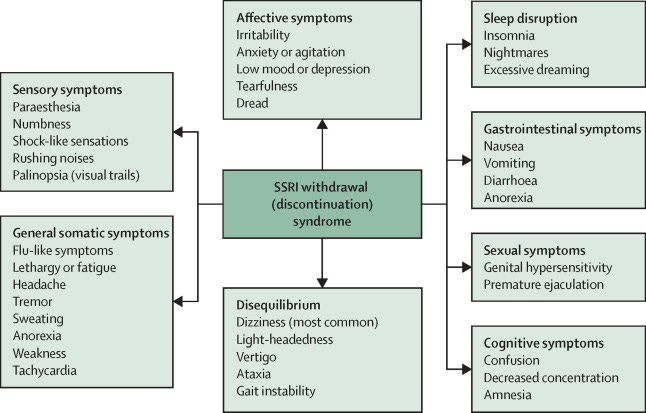
SSRI withdrawal symptoms. Source: Horowitz and Taylor, 2019
Notice any similarities?
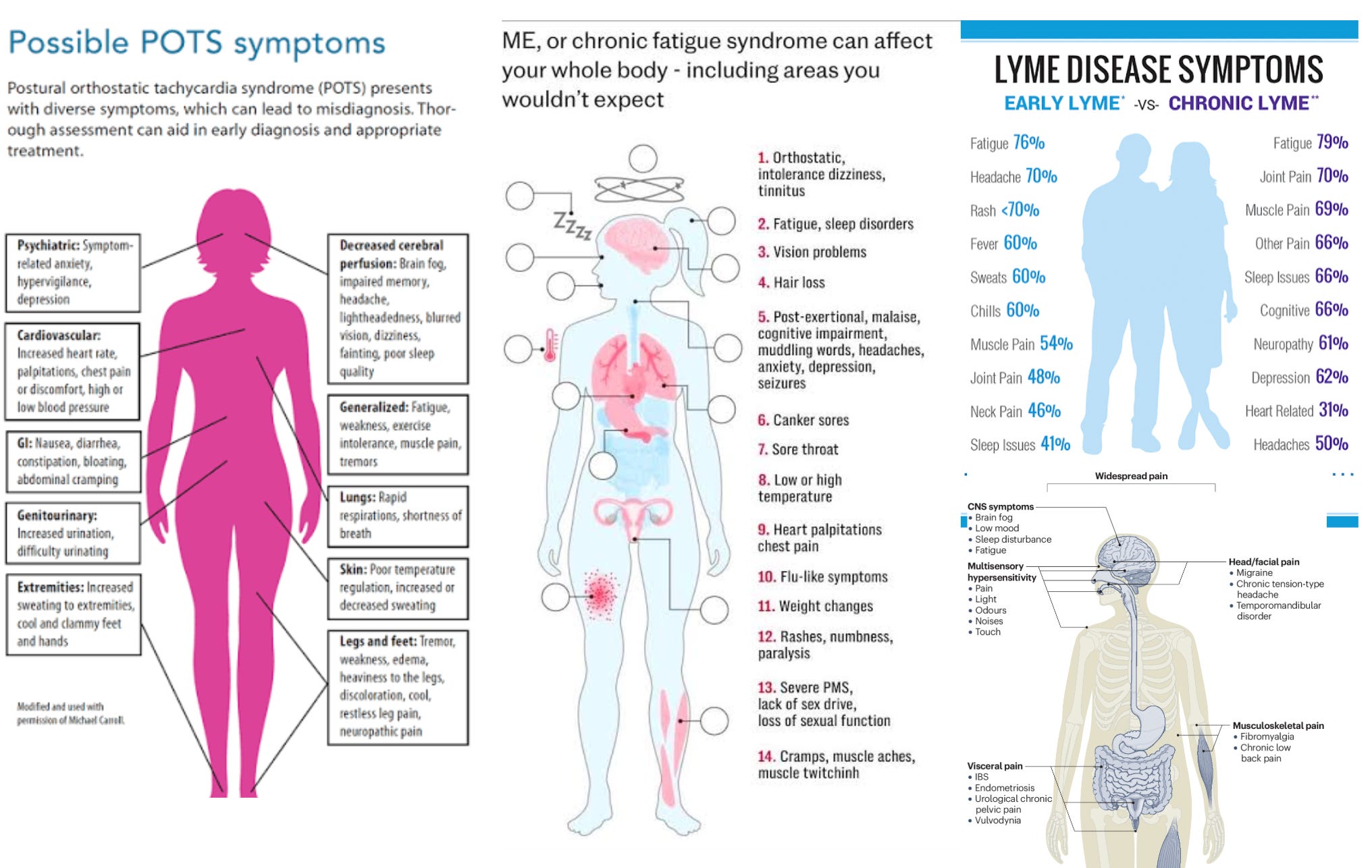
Protracted SRI symptoms do not appear to be reliably distinguishable from benzodiazepine-induced neurologic dysfunction, or withdrawal from non-serotonergic antidepressants (maybe data will eventually suggest otherwise, but such comparisons are very difficult to make with statistical rigor).
We can see that the seminal 2021 Lancet article on nociplastic pain/central sensitization maps perfectly on protracted withdrawal:
“Caring for patients with nociplastic pain is challenging; the pain complaint is often difficult to describe, there are associated subjective symptoms, and pathognomonic clinical findings or biomarkers are absent. Nociplastic pain conditions are frustrating for both health-care professionals and patients, with physicians uncertain regarding diagnosis and patients resentful that their symptoms are doubted.”
It’s quite possible we’ve been thinking about antidepressant withdrawal the wrong way. Acute antidepressant withdrawal is one of many triggers that can lead to central sensitization, but is itself completely distinct from protracted withdrawal as it’s currently defined. In protracted withdrawal patients who do not improve, or worsen, with antidepressant reinstatement, I propose that the true diagnosis may be central sensitization.
The stress-diathesis model suggests that people may carry different biological vulnerability to central sensitization and a different threshold of "hits" required to reveal that underlying diathesis and manifest overt symptoms of CS. For individuals with highly vulnerable genetics, a single week of severe antidepressant withdrawal may be enough to trigger CS. For others, several nervous system insults are required—a hostile household growing up, then an abusive partner, followed by a life-threatening hospitalization, before experiencing acute antidepressant withdrawal, which breaks the glass and leads to the manifestation of CS symptoms. For some very high-functioning individuals with no prior “hits” and extremely high in conscientiousness, the psychological distress of suddenly being incapacitated by debilitating antidepressant withdrawal symptoms (and pushing through anyway in the name of discipline and dutifulness) might be a powerful enough hit to shatter the glass and manifest CS. In such a case, the antidepressant is the trigger that sets off the CS cascade, but is simply one of many possible triggers. A process has manifested that operates independently of the antidepressant, of serotonin, and its treatment may have little to do with it (e.g. reinstatement).
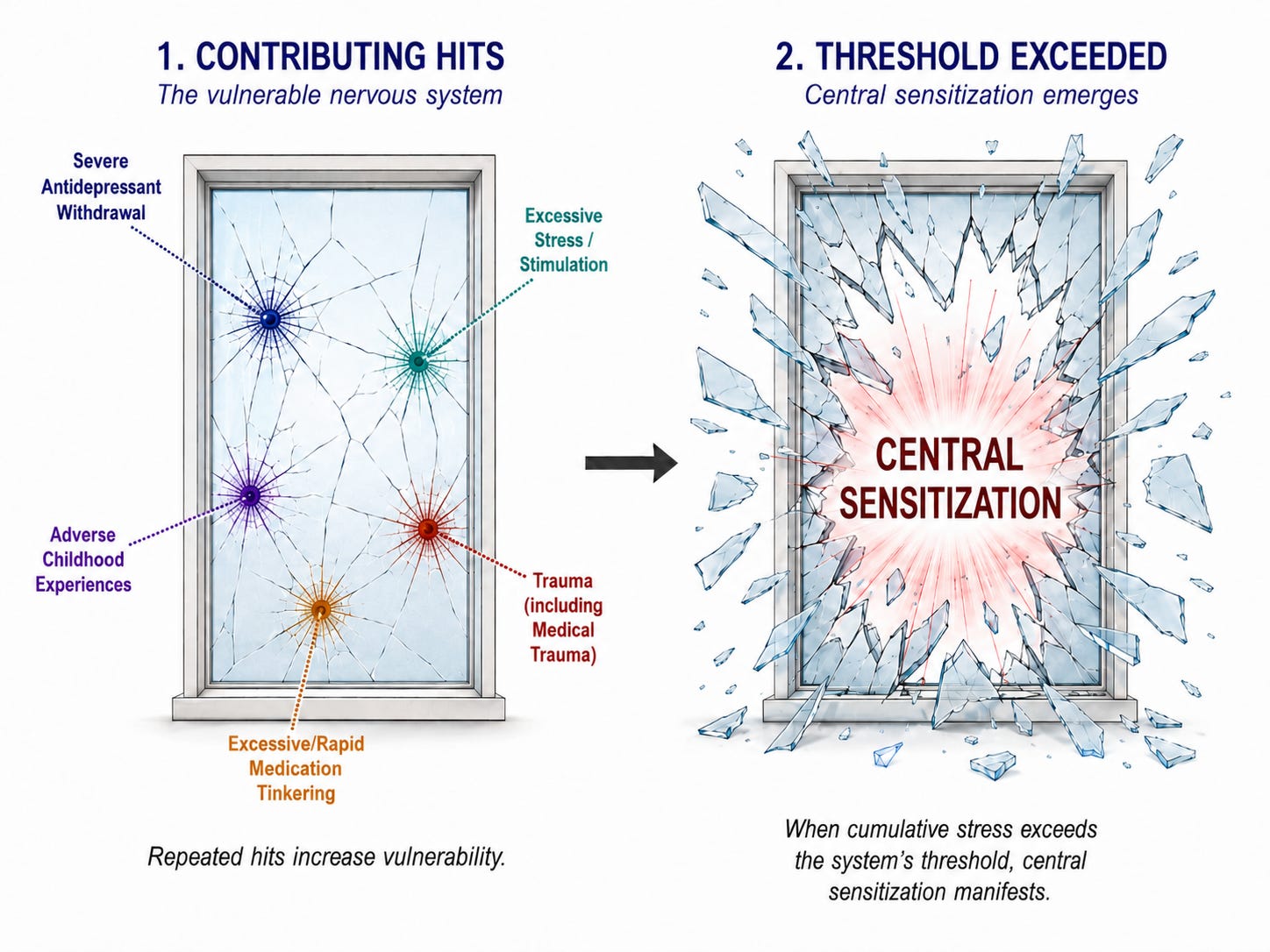
Figure. A model of central sensitization, with antidepressant withdrawal conceptualized a “hit” that contributes to central sensitization (note: biological predisposition to central sensitization is represented by the thickness of the glass)
A few notes: This theory does not suggest that patients with “protracted withdrawal” making their symptoms up. Symptoms of central sensitization are real and not feigned. We also need to destigmatize, even deplatform, the concept of “psychosomatic.” The nervous system is the interface of mind and body. Conditions that originate in the central nervous system are just as real and debilitating as somatic conditions with currently identifiable biological markers. Stress and trauma have clear effects on the body, and on their own can induce symptoms of a heart attack or mimic a seizure. A central sensitization theory of protracted withdrawal also does not blame the patient. Patients with central sensitization often have had no control over adversarial experiences, traumatic events and bad medical advice, despite advocating for themselves the best they can. Identifying a contributing factor isn't the same as assigning blame to a patient: we don't consider it blame when a cardiologist counsels a patient on diet, exercise, or smoking cessation as contributors to their heart disease. The same logic extends central sensitization.
If confirmed, the CS theory of protracted withdrawal has major clinical implications for treatment and recovery. It would also great news, suggesting no actual “injury” or irreversible damage has occurred in most (hopefully all) patients experiencing these debilitating symptoms. However, a differential is possible: Maybe 90% of protracted withdrawal cases are central sensitization, while 10% reflect TD-esque damage to the serotonin system. Maybe both coexist.
In the next piece, we’ll turn to recovery. If protracted withdrawal is best understood through the lens of central sensitization, this has profound implications for treatment.
Bryan Shapiro, MD
Psychotropic drugs are all central nervous system drugs, and their withdrawal syndromes are remarkably similar (Lerner & Klein, 2019 https://doi.org/10.1093/braincomms/fcz025), particularly the protracted syndromes.
Aside from specific brain neuroreceptors, psychotropic drugs modify the CNS and ANS. They leverage neuroplasticity.
Across psychotropics, many withdrawal symptoms are described as autonomic in origin. Many of the "Medically Unexplained Disorders" mentioned by Dr. Shapiro have autonomic components.
All live humans have CNS and autonomic nervous systems. That is the universality.
We should own up to it -- psychiatric drugs monkey around with the CNS and ANS, not just the brain. Depending on your perspective, what happens after the brain, CNS, and ANS get modified can be described as therapy, dysfunction, dysregulation, damage, or disaster.
Destabilization by psychotropic drugs, virus infection, lightning and electrocution, etc. can make the CNS and ANS extraordinarly reactive -- "sensitization" is the term for this. (Kindling is an extreme form of sensitized reaction.) Personality traits are not relevant, though they may determine emotional reactions to this distressing state of being.
Since the brain, CNS, and ANS are neuroplastic, I prefer to call it dysregulation, as according to the principle of neuroplasticity, re-adaptation can continue for many, many years. But unfortunately for some people, not nearly fast enough to prevent what seems to be permanent damage.
What is interesting, in my experience, about the Lyme disease cases is that most of the ones I've encountered are positive for the antibodies, so they do have Lyme disease, which is sort of fascinating.
A similar thing occurs with the cases that have lupus: about half have positive anti-dsDNA tests; the other half do not. Also, you missed lupus on your list.
Another observation: while most of the intracranial hypertension cases show no objective signs, I've come across a decent number with clear-cut postural headaches, suggesting that some percentage must be experiencing hypertension followed by a CSF leak. Personally, I find postural headaches very objective because, no matter how neurotic the person is, they are so genuinely baffled by the strangeness of the headache that, to my mind, it seems highly doubtful that it could be in any way performative or psychosomatic.
Not sure about sensitisation; that sounds too close to kindling, which I'm not convinced by. I think whatever it is, it's something much more like what happens in catatonia. People "pop out" of the "withdrawals"; that shouldn't be possible if it's sensitisation.
Also, here is a weird thread: akathisia and PMDD (Frank, 1931, “The Hormonal Causes of Premenstrual Tension”; Sani et al., 2014, “Low-dose acetazolamide in the treatment of premenstrual dysphoric disorder: A case series”).
The psychogenic nonepileptic seizure stuff is also interesting. I want to see the EEGs for myself because, in the cases I'm seeing, I would bet a lot of money that the EEG is abnormal. I mean a lot of money. Not propagation and seizures, but I would definitely expect epileptiform abnormalities. I've also seen a few of these epileptiform cases recover so abruptly on benzodiazepines that something definitely isn't right (Downs, Ward, & Farmer, 1991, “Preoccupation with suicide in patients treated with fluoxetine”).